

Who This Guide Is For
You’re launching a new dropshipping store, or scaling past your first 100 orders a month. You know self-fulfillment from your apartment is killing 20+ hours a week. But the traditional 3PLs you keep finding? They want $500–$2,000 minimum monthly commitments you can’t justify at this stage.
This sub-guide covers the middle path: fulfillment services built specifically for the startup tier — no minimums, pay-per-order, AI-assisted routing, and room to grow without renegotiating your contract every quarter.
sub-guides in this series. For the strategic picture of why fulfillmentdecides your 2026 outcome, read the main playbook.
Why Traditional Fulfillment Options Fail Startups
The fulfillment market in 2026 has a structural problem at the low-volume end. Three forces collide:
1. Self-fulfillment is a time sink
Per ShipBob’s 2025 small-merchant report, the average startup-stage founder spends 18–24 hours per week on pick-pack-ship when running 100–400 orders/month. That’s a half-time job added to running ads, sourcing products, and answering customer service.
The hidden cost isn’t just your time — it’s the opportunity cost. Every hour spent packing is an hour not spent testing a new creative, or fixing a landing page, or responding to a high-value customer.
2. Traditional 3PLs have a minimum-fee problem
Major 3PLs (the ones with slick marketing sites and enterprise logos) typically require:
- Monthly minimums of $500–$2,000 regardless of order volume
- 30-day notice for cancellation
- Annual contracts in many cases
- Setup/integration fees of $250–$1,000
For a startup doing 200 orders/month at $3 average margin ($600 gross), a $1,000 minimum consumes your entire profit. You’re working for the 3PL.
3. The “cheap” options compromise on what matters
The cheapest fulfillment services for startups (often single-operator warehouses on Shopify App Store) trade off the things that hurt most: accuracy (you’ll eat the return costs), tracking sync (you’ll get angry tickets), and returns processing (which becomes your problem again).
So the startup-tier store in 2026 faces a three-way squeeze: too big to self-fulfill, too small for enterprise 3PL, too picky for cheap options.
The answer is a category that didn’t really exist five years ago: startup-tier fulfillment services. The modern form of this category is what this guide is about.
What “Startup-Tier Fulfillment” Looks Like in 2026

The category has converged around five defining characteristics:
1. No monthly minimums
You pay per order. Period. Pick-pack fees typically run $3–$7 per order depending on weight, dimension, and add-ons (inserts, branded packaging, etc.).
2. AI-assisted warehouse routing
The service automatically picks the closest warehouse to the buyer’s shipping address. You don’t have to think about East vs West Coast — the system does it. This is the single biggest improvement over the old “supplier ships from Shenzhen” model.
3. Direct platform integration
Your Shopify, WooCommerce, Amazon, or TikTok Shop order syncs within seconds. No manual CSV uploads, no re-keying tracking numbers. The “AI Integration” that BLB mentions on its homepage is this category’s signature feature.
4. Transparent per-order pricing
You see exactly what you’re paying for: pick fee, pack fee, label, carrier rate, materials. No hidden surcharges, no quarterly “fuel adjustment” letters.
5. Built-in scaling path
A good startup-tier service doesn’t lock you in at 100 orders/month and then force you to find a new partner at 1,000. The same partner scales with you — pricing shifts (typically downward per unit as volume grows), but the integration, account team, and process stay.
This is the gap that emerged in the fulfillment market between 2020 and 2026, and it’s why a new tier of services has appeared.
6 Evaluation Criteria for Choosing a Startup-Tier Fulfillment Service
Don’t pick by price-per-order alone. Score each candidate on these six dimensions:
1. Warehouse network and location strategy
Question: How many warehouses does the service operate, and where?
What good looks like: 3+ warehouses in the US, ideally covering East Coast, Central, and West Coast. Some services also have regional hubs in Europe or Australia if you sell internationally.
Why it matters: A single warehouse on the West Coast means 5+ day shipping to East Coast buyers — the same problem as shipping from China, just with better tracking.
2. Technology integration
Question: Does it integrate natively with your platform (Shopify, WooCommerce, TikTok Shop, Amazon)?
What good looks like: Native app, real-time inventory sync, automated tracking push-back, returns portal that your customer can self-serve.
Red flag: “We integrate via CSV import” — that’s a 2015 solution.
3. Pricing transparency
Question: Can you see the full breakdown of fees on the website or in a sales call?
What good looks like: Clear pricing tier, downloadable rate card, no “contact us for enterprise pricing” gatekeeping.
Red flag: Pricing requires a “discovery call” — that’s usually code for “we want to anchor on volume before showing rates.”
4. Quality control process
Question: What’s the inspection protocol before a unit ships?
What good looks like: IQC (incoming quality control) at receiving + FQC (final quality control) before pack. Dual verification, not just spot checks.
Why it matters: This is where the difference between a 2% return rate and a 0.2% return rate lives. A 2% return rate is margin suicide; a 0.2% rate is sustainable.
For more on how this works, see Sub-guide 6: American Ecommerce Warehouse Buyer’s Guide (coming Sep 2026) — it covers the 12-criteria evaluation matrix.
5. Customer support responsiveness
Question: What’s the support response time SLA?
What good looks like: 24/7 priority support, sub-2-hour response on operational issues, dedicated account manager for accounts over a certain threshold.
Red flag: “Email us and we’ll respond within 1–2 business days” — by the time they respond, your customer has already requested a chargeback.
6. Returns handling
Question: How does the service process returns?
What good looks like: Branded return portal, automated RMA, restocking to sellable inventory, return-to-warehouse for QC, disposition options (refund, exchange, donate).
Why it matters: Returns are 15–30% of ecom volume on most categories. If you’re hand-processing every return, you’ve outsourced fulfillment but kept the worst part of the job.
Comparison: Self-Fulfillment vs Traditional 3PL vs Startup-Tier Service
| Dimension | Self-Fulfillment | Traditional 3PL | Startup-Tier Service |
|---|---|---|---|
| Order volume sweet spot | 0–100/month | 1,000+/month | 100–2,000/month |
| Setup time | Same day | 2–6 weeks | 1–3 days |
| Monthly minimum | $0 | $500–$2,000 | $0 |
| Per-order cost | $3–$5 (your time + materials) | $4–$8 | $3–$7 |
| Warehouse locations | Your apartment | 1–3 (often single region) | 3–6 (US-wide or global) |
| Technology integration | Manual / DIY | Enterprise-grade, often overkill | Native Shopify/Amazon/TikTok |
| Customer support | You | Account manager | 24/7 priority |
| Quality control | Variable | Spot check | Dual IQC + FQC |
| Your time spent on ops | 18–24 hrs/week | 1–2 hrs/week | 1–2 hrs/week |
| Cancellation flexibility | N/A | 30-day notice typical | Anytime |
The honest read: Startup-tier services are the only category designed for the transition phase. Self-fulfillment burns you before you have revenue. Enterprise 3PLs lock you into costs you can’t justify. Startup-tier lets you scale from 100 to 2,000 orders/month without re-platforming.
How to Migrate to a Startup-Tier Service (Without Disrupting Active Customers)
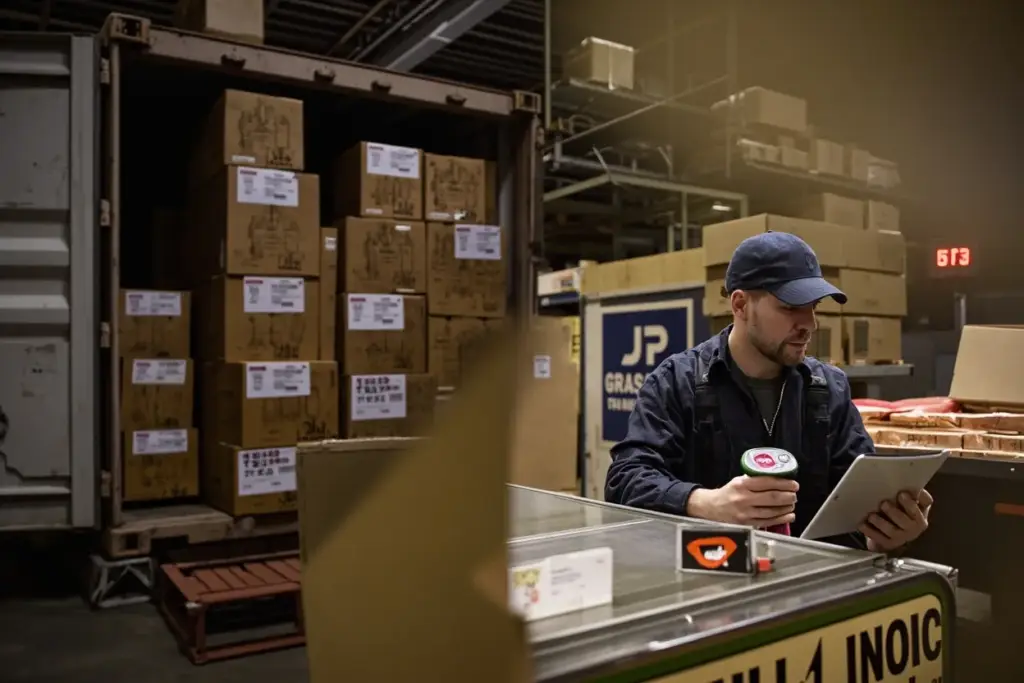
If you’re currently self-fulfilling, here’s the safe migration sequence:
Step 1 (Day 1–3): Audit your current state.
Document: SKU count, average daily orders, peak day, current shipping cost per order, current return rate. You’ll use this as the baseline.
Step 2 (Day 4–10): Shortlist 3 services.
Apply the 6 evaluation criteria above. Request pricing cards. Ask for 3 reference customers in your category.
Step 3 (Day 11–14): Run a parallel pilot.
Send 10% of your orders to the new service for 2 weeks. Keep the other 90% on your current process. Compare: delivery time, accuracy, customer tickets.
Step 4 (Day 15–21): Migrate the platform integration.
Once the pilot passes, swap the connection: point your Shopify/TikTok Shop at the new service. Most startup-tier services do this in a single call. For East Coast-heavy stores, the 7-provider comparison covers which partner handles 2-day ground best from a NJ hub.
Step 5 (Day 22+): Decommission the old process.
Cancel inventory in your old location. Redirect returns. Update your FAQ and shipping policy page.
Total migration: 3–4 weeks Customer experience usually improves (faster delivery, better tracking).
For the broader strategy on fulfillment quality compounding, see the dropshipping fulfillment playbook.
When to Graduate Out of Startup-Tier
You’ll know it’s time to consider an enterprise 3PL when:
- You’re doing 5,000+ orders/month consistently
- You need custom kitting or subscription box assembly
- You have dedicated inventory that’s brand-owned (not supplier-direct)
- You need FDA-registered or hazmat-certified warehousing
Until then, the startup-tier category has plenty of headroom. The post-100 orders/month tier — the fulfillment center for small business range — is covered in detail in the next sub-guide.
How BLB Approaches the Startup Tier
BLB Dropshipping operates 6 US-based warehouses with AI-assisted order routing (the system picks the closest warehouse to each buyer’s address automatically). The startup-tier features are built into the base service: no monthly minimums, native Shopify/Amazon/TikTok Shop integrations, dual IQC + FQC quality control (99.8% pass rate per batch), 24/7 priority support with sub-2-hour response, and a branded returns portal with automated RMA. Get a quote and run a parallel pilot — you can keep your current process running while you evaluate.
Frequently Asked Questions
What’s the difference between a fulfillment service and a 3PL?
Technically, all fulfillment services are 3PLs (third-party logistics). The “startup-tier” label is shorthand for services designed for sub-2,000 orders/month with no minimums. enterprise 3PLs serve accounts doing 5,000+/month… For the East Coast-specific shortlist at this scale, see the7-provider comparison. with negotiated rates and dedicated ops teams.
Do I need to own inventory to use a startup-tier service?
No. If you’re dropshipping, the supplier ships bulk to the fulfillment warehouse, and the service picks/packs/ships individual orders to your buyers. The service owns the warehouse and the process; you own the customer relationship.
Can I use a startup-tier service for Amazon FBA?
Not directly — Amazon FBA is Amazon’s own fulfillment network. But you can use a startup-tier service for your Shopify/WooCommerce/TikTok Shop orders while FBA handles Amazon. Many brands run both in parallel.
What happens if my order volume spikes during a holiday?
Startup-tier services should be able to absorb 2–3x normal volume for 2–3 weeks (Black Friday / Cyber Monday). Ask about surge capacity and any surge pricing before signing.
Part of the BLB Dropshipping content library. Updated September 2026.
The Dropshipping Fulfillment Series — Navigation
You are on Sub-guide 2. Jump to any other published sub-guide in the series.
- ← Back to Main Guide (Part 1 of 8)
- Sub-guide 2 (current): Fulfillment Services for Startups
- → Sub-guide 3: US Fulfillment Center Strategy (Coming Sep 2026)
- Sub-guide 1: 3PL Ecommerce Fulfillment vs In-House (Coming Sep 2026)
- Sub-guide 4: East Coast Order Fulfillment Providers (Coming Sep 2026)
- Sub-guide 5: Fulfillment Center for Small Business (Coming Sep 2026)
- Sub-guide 6: American Ecommerce Warehouse Buyer’s Guide (Coming Sep 2026)
- Sub-guide 7: Automated Dropshipping Fulfillment (Coming Sep 2026)
 English
  German
  Greek
Greek  Spanish
  French
  Italian
  Dutch
Dutch  Polish
  Portuguese
  Swedish