
Who This Guide Is For
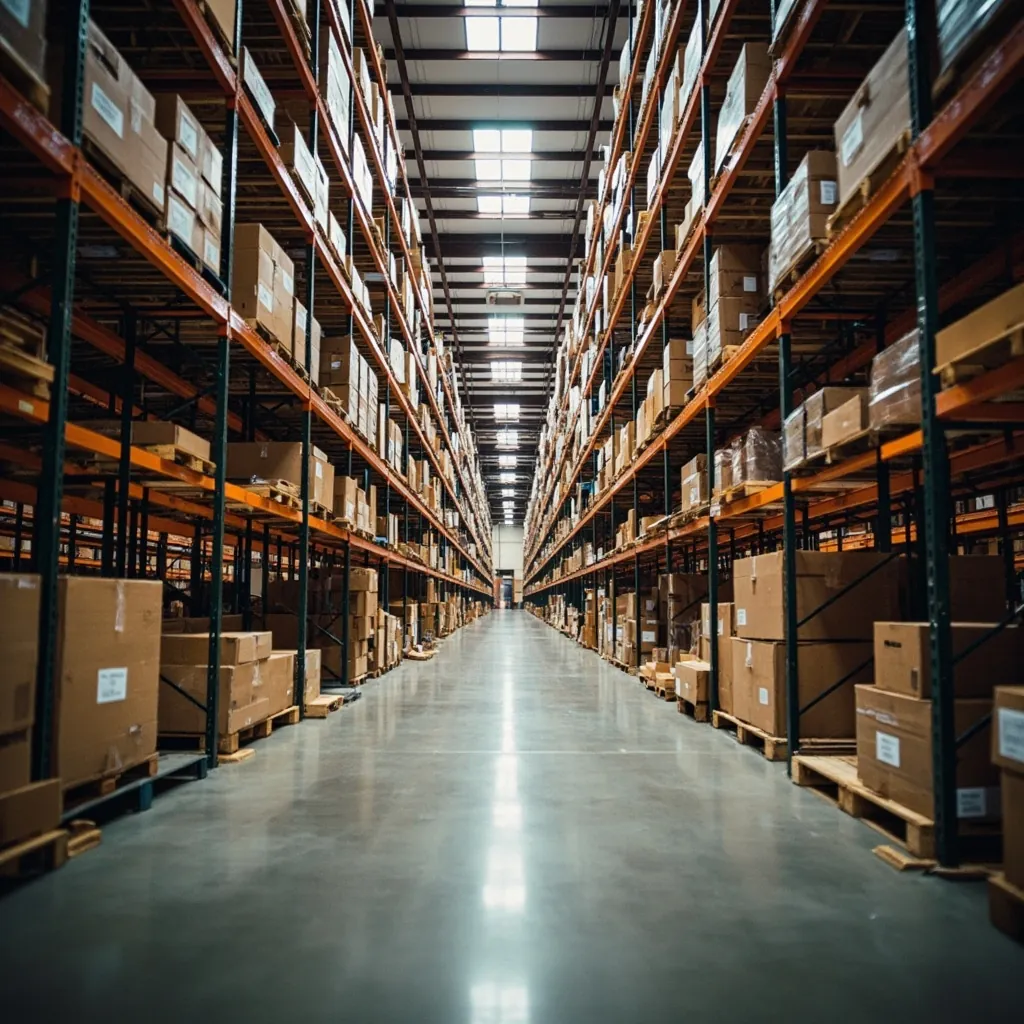
You’re vetting US-based fulfillment partners and you’ve realized the term “American ecommerce warehouse” covers everything from a 200-square-foot garage operation to a 500,000-square-foot national network. The differences in cost, technology, and reliability are massive — and the wrong pick costs you months of margin erosion.
This sub-guide is the 12-criteria evaluation matrix for choosing an American ecommerce warehouse in 2026, plus the comparison between US warehouses and the China-direct dropshipping model, and what BLB’s 6-warehouse network actually offers.
This is Sub-guide 6 in the 8-part Dropshipping Fulfillment series. It’s the deep buyer’s guide your store needs if you’re signing a multi-month contract with a fulfillment partner — not a casual comparison.
Why American Ecommerce Warehouses Are Now the Default for 2026 Dropshipping
For most of the 2010s, “dropshipping” meant “China-direct.” Supplier in Shenzhen or Yiwu, 15–25 day shipping to US buyers, low per-unit cost, slow delivery. That model still exists — but it’s losing to US-based fulfillment for three structural reasons:
1. Buyer expectations have shifted
Per a 2025 Narvar consumer survey, 56% of US online buyers expect delivery in 3 days or less. The old 15-day economy shipping from China doesn’t just look slow — it actively hurts your conversion rate. A Baymard Institute cart-abandonment study found shipping speed in the top three reasons buyers bail.
2. AI-assisted routing has changed the cost math
Old assumption: US warehouses are expensive. New reality: AI order routing across a multi-warehouse network cuts the per-order cost nearly to parity with China-direct, while delivering in 2 days instead of 15. The premium for US fulfillment in 2026 is roughly $1–$3 per order — versus the conversion loss you take on slow shipping.
3. Tariff and customs risk has spiked
Recent changes to USPS customs handling for China-origin parcels and ongoing tariff policy uncertainty have made China-direct less predictable. US-warehoused inventory sidesteps the customs layer entirely.
In other words: the strategic default for 2026 is American ecommerce warehousing, with China-direct reserved for low-AOV / long-lead-time categories where speed isn’t a differentiator.
American Ecommerce Warehouse vs China-Direct Dropshipping: The 2026 Comparison
| Dimension | American Ecommerce Warehouse | China-Direct Dropshipping |
|---|---|---|
| Shipping time to US buyer | 1–3 days | 15–25 days |
| Shipping cost (carrier rate) | $4–$9 (USPS, UPS, FedEx ground) | $3–$8 (ePacket, China Post, Yanwen) |
| Pick-pack fee | $3–$7 per order | $0–$2 per order (supplier absorbs) |
| Per-order total landed cost | $7–$16 | $3–$10 |
| Buyer expectation match | ✅ Yes (2-day is now table stakes) | ❌ No (15+ days = conversion killer) |
| Conversion rate impact | +5% to +15% typical | Baseline |
| Return rate | 2–8% (US returns easy) | 5–15% (international returns painful) |
| Quality control before dispatch | Dual IQC + FQC possible | Spot-check only |
| Tariff / customs risk | None | High — Section 301, de minimis changes |
| Brand asset (inserts, packaging) | ✅ Full customization | ❌ Limited |
| Inventory flexibility | ✅ Easy to scale | Limited by supplier MOQ |
| Best for | US-market dropshipping, DTC brands | Long-tail SKUs, low-AOV, test-and-learn |
The honest read: Per-order landed cost is higher for US warehouses. But conversion lift + lower returns + no customs risk typically net more margin in 2026. The China-direct model survives only in narrow product categories where speed doesn’t drive conversion.
The 12-Criteria Evaluation Matrix
When you’re vetting an American ecommerce warehouse, score each candidate on these twelve dimensions. Rank 1–5 per criterion, weight by importance for your store, and total the scores.
1. Warehouse network and ZIP coverage
Question: How many warehouses, and where?
What good looks like (2026): Multi-warehouse network (3+ US locations) covering East Coast, Central, and West Coast. Single-warehouse operators are a red flag for any US-wide store.
Weight: High — this is the foundation.
2. AI-assisted order routing
Question: Does the system automatically pick the closest warehouse to each buyer?
What good looks like: Real-time routing based on buyer ZIP, inventory levels across warehouses, and current carrier rates. Sub-second decision latency from order placement to warehouse assignment.
Why it matters: Without AI routing, you manually choose a warehouse — or worse, all orders ship from one location and you pay for cross-country shipping on half of them.
3. Carrier rate negotiation
Question: What USPS, UPS, and FedEx rates have they negotiated?
What good looks like: Discounted rates on all three major carriers (15–35% off retail). Transparent rate card before signing. Multiple carrier options per shipment (not locked into one).
4. Same-day shipping cutoff
Question: What time does an order need to land in their system to ship the same day?
What good looks like: 2 PM local warehouse time or later. Earlier cutoffs (10 AM, noon) are operational drag.
5. Quality control process
Question: What’s inspected before a unit ships?
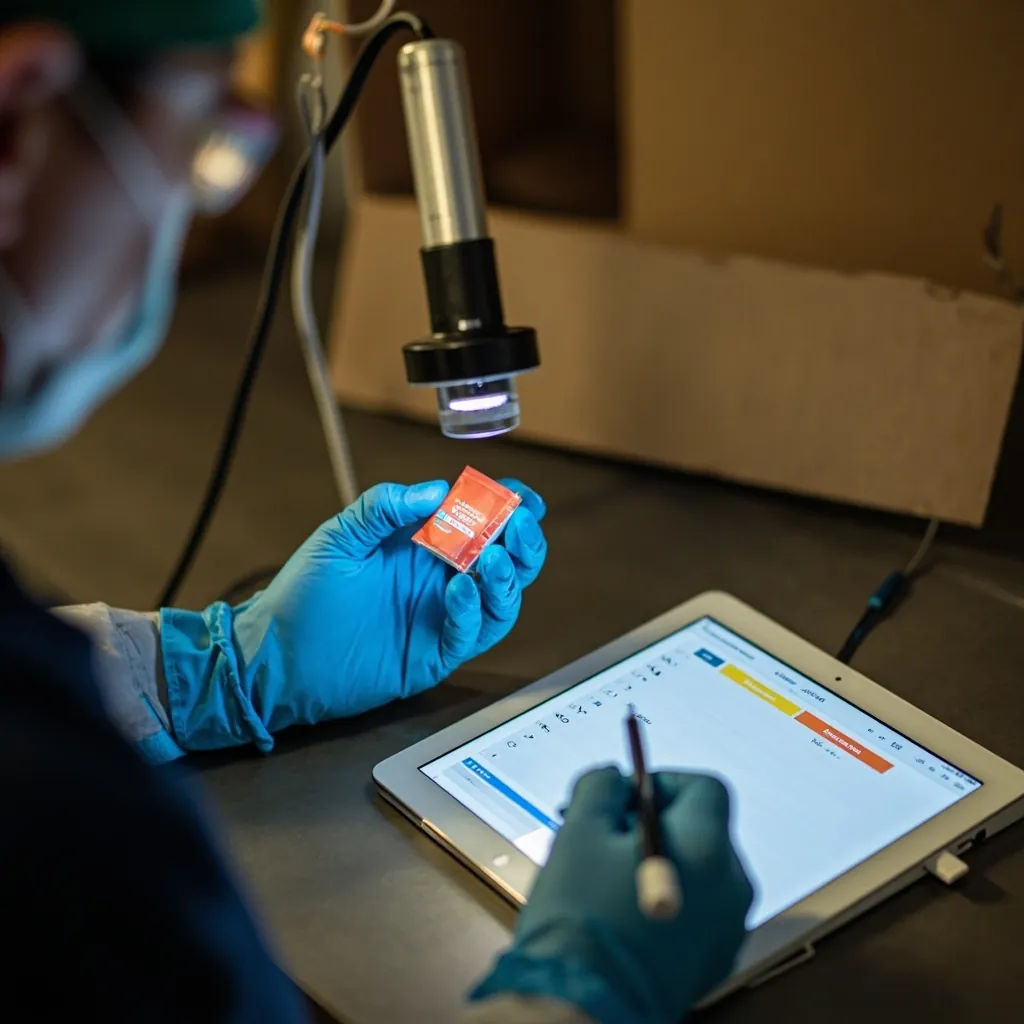
What good looks like: Dual IQC at receiving + FQC before pack. Documented pass rate (BLB benchmark: 99.8%). Photography of damaged units before disposition.
Why it matters: Quality control is the difference between a 2% return rate (margin suicide) and a 0.2% return rate (sustainable). See Sub-guide 4: East Coast Order Fulfillment Providers for the QC framework in detail.
6. Technology integration
Question: Does the platform integrate natively with your store?
What good looks like: Native app, real-time inventory sync, automated tracking push-back, returns portal your customer can self-serve.
Red flag: “We integrate via CSV import” — that’s a 2015 solution.
7. Returns processing
Question: What happens when a customer returns an item?
What good looks like: Branded return portal, automated RMA, restocking to sellable inventory, QC on returned units, disposition options (refund / exchange / donate / dispose).
8. Insurance and liability
Question: What’s covered if inventory is damaged or lost in their warehouse?
What good looks like: All-risk warehouse legal liability coverage, per-occurrence limit at or above your peak inventory value, simple claims process with documented SLA.
9. Pricing transparency
Question: Can you see the full breakdown of fees on the website or in a sales call?
What good looks like: Clear pricing tier, downloadable rate card, no “contact us for enterprise pricing” gatekeeping.
Red flag: Pricing requires a “discovery call” — usually code for “we want to anchor on volume before showing rates.
10. Customer support responsiveness
Question: What’s the support response SLA?
What good looks like: 24/7 priority support, sub-2-hour response on operational issues, dedicated account manager at scale.
Red flag: “Email us and we’ll respond within 1–2 business days” — by the time they respond, your customer has already requested a chargeback.
11. Scalability and surge capacity
Question: What happens during Black Friday / Cyber Monday?
What good looks like: Documented surge capacity (2–3x normal volume for 2–3 weeks). Temporary labor pools. No “we’ll get to it” delays during peak.
Red flag: Generic answer without numbers. “We’ve handled big peaks before” is not a plan.
12. Specialty compliance (FDA, hazmat, lithium batteries, etc.)
Question: Can they handle your specific category?
What good looks like: Documented certifications for your category (FDA-registered for supplements, hazmat for aerosols, etc.). Ask for the certification documents before signing.
Why it matters: If your product requires FDA registration and your warehouse isn’t registered, you have a regulatory problem that doesn’t show up until an audit.
How BLB’s 6 American Ecommerce Warehouses Stack Up
BLB operates 6 US-based warehouses with AI-assisted order routing. The system’s automated logic picks the closest warehouse to each buyer’s address — no manual routing, no Zone 8 surprises.
Network footprint:
- Northeast: New Jersey — covers Zone 1–3 ground to all of I-95 corridor
- Southeast: Florida or Georgia — covers Zone 3–5 ground to Southeast + TX
- Midwest: Ohio or Indiana — covers Zone 3–5 ground to Central US
- South Central: Texas — covers Zone 4–6 ground to TX, OK, LA, AR
- West: California — covers Zone 6–8 ground to Pacific Coast + Mountain West
- Northwest: Washington or Oregon — covers Zone 7–8 ground to Pacific Northwest
Operational capabilities:
- Dual IQC + FQC quality control — incoming units inspected at receiving, outgoing units inspected again before pack. Documented 99.8% pass rate per batch.
- 2 PM local cutoff for same-day shipping across all 6 warehouses
- Native integrations with Shopify, Amazon, TikTok Shop, WooCommerce — orders sync within seconds of placement
- 24/7 priority support with sub-2-hour operational response
- Returns portal with branded RMA flow, automated restocking, and disposition options
What this nets for a dropshipping store: A buyer in Brooklyn gets 1–2 day ground delivery. A buyer in Portland gets 1–2 day ground delivery from a different warehouse. A buyer in rural Iowa gets 2–3 day delivery from the Midwest hub. The routing system handles it automatically — you don’t think about warehouse selection.
For the broader context of how to choose between US fulfillment and self-shipping from suppliers, read Sub-guide 1: 3PL Ecommerce Fulfillment vs In-House (publishing Sep 2026).
Evaluating a US warehouse partner? Get pricing in 24 hours.
BLB Dropshipping operates 6 US-based warehouses with AI-assisted order routing across the network. Send your SKU list and forecast volumes — you’ll get a per-order rate card back the next business day, no “discovery call” gatekeeping. Request pricing or browse the BLB product catalog to see what’s currently in stock across the network.
How to Build Your Own Shortlist (Without Going to 50 Sales Calls)
The realistic US-warehouse shortlist for most 2026 dropshipping stores is 2–3 candidates. Here’s how to narrow it.
Step 1: Filter by minimums and pricing transparency.
If the website hides pricing behind a “contact us” form, deprioritize. You want downloadable rate cards.
Step 2: Check network size and AI routing.
Single-warehouse operators don’t scale to US-wide. Multi-warehouse networks without AI routing still require manual decision-making. Look for AI-routed multi-warehouse.
Step 3: Request 3 reference customers in your category.
A serious fulfillment partner will share references on request. If they hesitate, that’s data.
Step 4: Run a parallel pilot.
Send 10–20% of orders to the new provider for 2 weeks. Compare: delivery time, accuracy, customer tickets, support responsiveness.
Step 5: Decide on the operational metrics, not the sales pitch.
The cheapest pitch usually wins. The cheapest operational outcome is what you want.
Frequently Asked Questions
What’s the difference between a warehouse and a fulfillment center?
A warehouse stores inventory. A fulfillment center stores inventory and picks, packs, labels, and ships orders to your buyers on your behalf. “American ecommerce warehouse” in the dropshipping context almost always means fulfillment center — the operator handles the full order-to-ship flow.
How much does an American ecommerce warehouse cost?
Pick-pack fees typically run $3–$7 per order depending on weight, dimension, and inserts. Carrier rates (USPS, UPS, FedEx) are passed through at negotiated discounts. Storage fees apply for slow-moving SKUs (typically $0.50–$2 per cubic foot per month). No monthly minimum at the startup tier; enterprise tiers often have minimums.
Do US warehouses handle international orders?
Most do — shipping to Canada, Mexico, UK, EU, Australia via DHL, FedEx International, or USPS International. International shipping costs more (typically $15–$40 per order) and customs clearance adds 2–5 days. If international is a major channel, ask specifically about international experience.
Can I use multiple American ecommerce warehouses?
Yes — and you should if your buyer map is US-wide. BLB operates 6 US warehouses as a single integrated network; orders route to the closest automatically. Some merchants use a primary US warehouse plus a secondary 3PL for peak season or category-specific needs.
How do I migrate to a US warehouse from a China-direct supplier?
Plan 4–6 weeks. (1) Audit current SKUs and order patterns. (2) Shortlist 2–3 US warehouse partners and request pricing. (3) Send initial inventory to the chosen US warehouse (typically 2–4 weeks of forward stock). (4) Run a parallel pilot — keep some China-direct orders flowing while US orders ramp. (5) Decommission China-direct for the SKUs that work in the US warehouse model.
Part of the BLB Dropshipping content library. Updated September 2026.
The Dropshipping Fulfillment Series — Navigation
You are on Sub-guide 6. Jump to any other published sub-guide in the series.
- ← Back to Main Guide (Part 1 of 8)
- Sub-guide 6 (current): American Ecommerce Warehouse Buyer’s Guide
- → Sub-guide 7: Automated Dropshipping Fulfillment (Coming Sep 2026)
- Sub-guide 1: 3PL Ecommerce Fulfillment vs In-House (Coming Sep 2026)
- Sub-guide 2: Fulfillment Services for Startups (Live)
- Sub-guide 3: US Fulfillment Center Strategy (Coming Sep 2026)
- Sub-guide 4: East Coast Order Fulfillment Providers (Live)
- Sub-guide 5: Fulfillment Center for Small Business (Coming Sep 2026)