
Home › Blog › Dropshipping Fulfillment📅 The Complete 8-Part SeriesPart 1 of 8 • Main Guide — This is the hub. Each numbered section below links to a dedicated sub-guide in the Dropshipping Fulfillment Series. Sub-guides publish daily through September 2026.
📆 Published so far (4 of 8):
- ✓ Main Guide (this page)
- ✓ Sub-guide 2: Fulfillment Services for Startups — the 0–300 orders/month path
- ✓ Sub-guide 4: East Coast Order Fulfillment Providers — 7 providers compared
- ✓ Sub-guide 5: Fulfillment Center for Small Business — 7 options for the 100–2,000 tier
- ✓ Sub-guide 6: American Ecommerce Warehouse Buyer’s Guide — 12-criteria evaluation matrix
- 🔔 Sub-guides 1, 3, 7 publishing through Sep 2026
Table of Contents — The Complete 8-Part Series
- 3PL Ecommerce Fulfillment vs In-HouseComing Sep 2026 — Sub-guide 1 of the series.
- Fulfillment Services for Startups ✓ (Live)Sub-guide 2 — Read now → the 0–300 orders/month path.
- US Fulfillment Center StrategyComing Sep 2026 — Sub-guide 3 of the series.
- East Coast Order Fulfillment Providers ✓ (Live)Sub-guide 4 — Read now → 7 options, I-95 corridor.
- Fulfillment Center for Small Business ✓ (Live)Sub-guide 5 — Read now → 10-criteria evaluation matrix.
- American Ecommerce Warehouse Buyer’s Guide ✓ (Live)Sub-guide 6 — Read now → 12-criteria deep dive.
- Automated Dropshipping FulfillmentComing Sep 2026 — Sub-guide 7 of the series.
What Is Dropshipping Fulfillment in 2026?
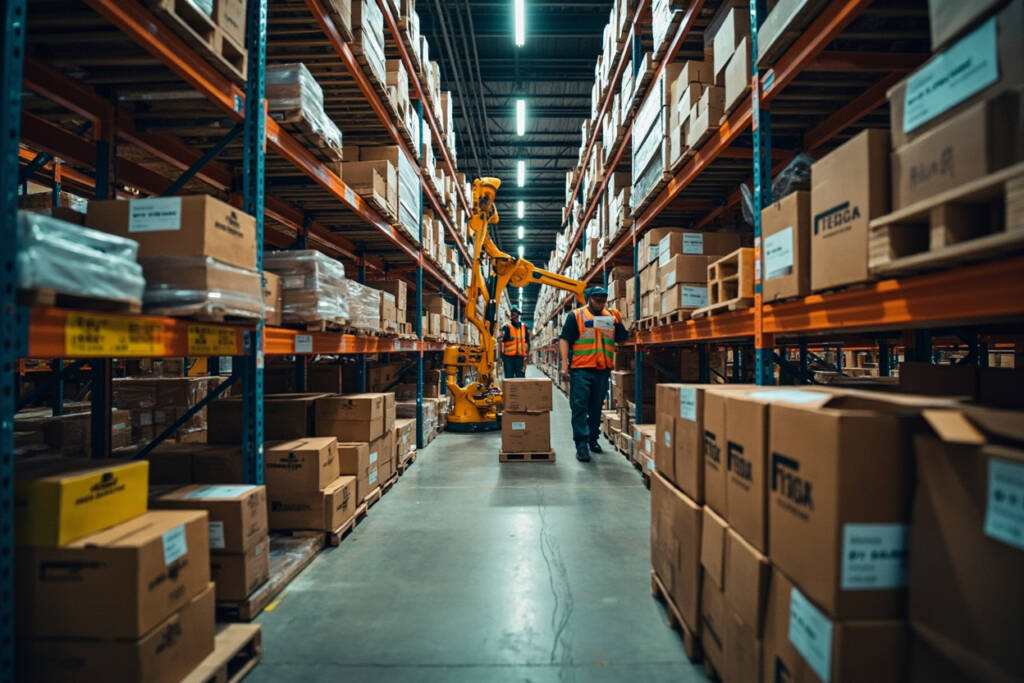
Dropshipping fulfillment is the operational chain that turns a customer order into a delivered package without you holding inventory: order routing → pick → pack → label → dispatch → ship → tracking sync → delivery confirmation. In a traditional ecom business, this chain runs inside your own warehouse; in dropshipping, it runs at the supplier or a third-party logistics (3PL) partner. That’s why fulfillment is the single biggest variable cost and the single biggest competitive lever you have as a dropshipper.
Three structural shifts have changed the math in 2026:
- Speed is now table stakes. Two-day shipping has shifted from a premium perk to a buyer expectation. If your store takes 7–15 days, you lose the cart — see Sub-guide 4: East Coast Order Fulfillment Providers for the 2-day ground math from a New Jersey hub.
- AI has moved from “feature” to “infrastructure.” Order-to-dispatch automation is no longer optional past a few hundred orders a month — manual labor eats margin. The architecture itself is covered in Sub-guide 7: Automated Dropshipping Fulfillment (publishing Sep 2026).
- Geography has flipped. The old China-direct, 15–30 day playbook is being replaced by US-based warehouses with same-region dispatch — closer to the buyer, faster to the door. The strategy is in Sub-guide 3: US Fulfillment Center Strategy (publishing Sep 2026), and the East Coast implications in Sub-guide 4.
If you’re building a dropshipping business in 2026, fulfillment is no longer “find a supplier and ship.” It’s a strategy decision that touches cost structure, customer experience, ad spend efficiency, and return rates. Each section below links to the sub-guide that goes deep on that decision point.
Why Fulfillment Decides Your 2026 Outcome
Most dropshippers focus on product research and ad creative — and then wonder why margins are thin and refund rates climb. The answer is almost always in fulfillment. Here are three concrete problems and where to find the fix:
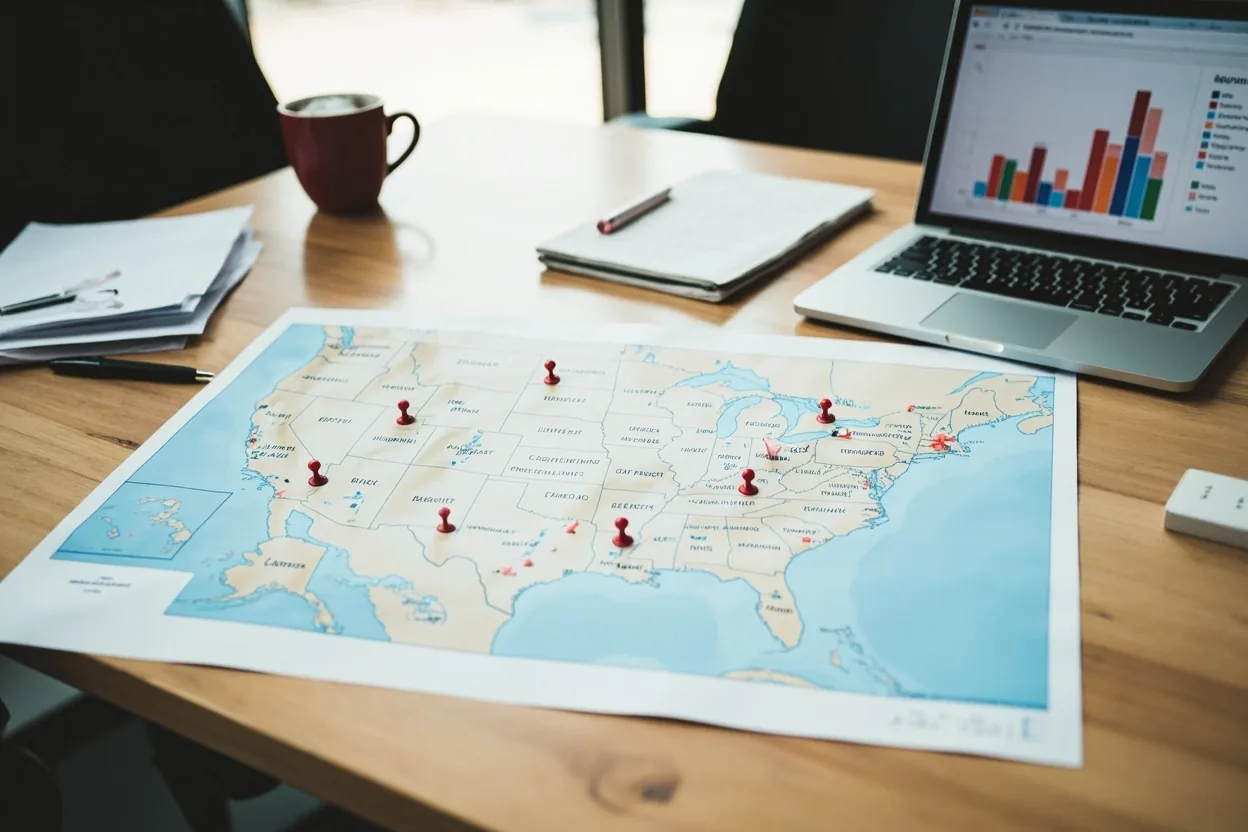
Problem 1 — Slow shipping kills conversion. A Baymard Institute study found shipping speed is one of the top three reasons buyers abandon a cart. The fix is 2-day ground reach from a US warehouse. Two paths depending on your buyer map: Sub-guide 4 for East Coast-heavy stores (the largest US ecom corridor, ~40% of spend), or Sub-guide 3 for the multi-region strategy.
Problem 2 — Self-fulfillment costs the founder’s time. A ShipBob analysis of 2025 fulfillment data shows 2-day shipping zones lift repeat-purchase rates by 23% vs 5–7 day zones, but the math doesn’t work if you’re packing boxes yourself. The tier-by-tier break-even is in Sub-guide 2: Fulfillment Services for Startups — the modern pay-per-order, no-minimum model — and the post-startup path in Sub-guide 5: Fulfillment Center for Small Business.
Problem 3 — Carrier rate creep compounds. Per USPS 2025 Q3 fiscal data, Priority Mail grew 6.8% YoY in Q3 2025 — fulfillment demand is structural, and carrier rates are negotiated, not retail. The framework for evaluating the warehouse partners that bring you those negotiated rates is in Sub-guide 6: American Ecommerce Warehouse Buyer’s Guide, with 12 criteria scored 1–5 across the evaluation matrix.
In short: fulfillment quality compounds. It’s not a line item — it’s the floor under your entire business.
The 3 Operational Decisions
Every dropshipping store in 2026 has to make three operational decisions. The sub-guides in this series map 1:1 to each decision.
Decision 1 — Volume tier
| Your volume | Right sub-guide |
|---|---|
| 0–300 orders/month | Sub-guide 2: Fulfillment Services for Startups |
| 100–2,000 orders/month | Sub-guide 5: Fulfillment Center for Small Business |
| 300+ orders/month | Sub-guide 1: 3PL vs In-House (publishing Sep 2026) |
| 5,000+ orders/month | Sub-guide 1 + Sub-guide 7: Automation (publishing Sep 2026) |
Decision 2 — Geography
| Buyer concentration | Right sub-guide |
|---|---|
| East Coast-heavy (I-95 corridor) | Sub-guide 4: East Coast Order Fulfillment Providers |
| US-wide (multi-region) | Sub-guide 3: US Fulfillment Center Strategy (publishing Sep 2026) |
| Vetting any US warehouse partner | Sub-guide 6: American Ecommerce Warehouse |
Decision 3 — Quality control
If your return rate is creeping above 2%, the cause is almost always quality control at the warehouse — not the product. The QC framework lives in Sub-guide 4 (East Coast) and Sub-guide 6 (American Ecommerce Warehouse). Both score QC as a primary criterion.
The 8-Part Series — At a Glance
Each sub-guide is self-contained, but they reference each other. Read what you need, in the order your situation demands.
1. 3PL Ecommerce Fulfillment vs In-House — Coming Sep 2026
The cost-per-order math for transitioning out of self-fulfillment to a third-party logistics partner, and when the math doesn’t work. For most stores under 300 orders/month, see Sub-guide 2 first.
2. ✓ Fulfillment Services for Startups — LIVE
The sub-300 orders/month tier: no minimums, pay-per-order, AI routing. The starting point for most new stores. When you outgrow it, jump to Sub-guide 5: Small Business.
3. US Fulfillment Center Strategy — Coming Sep 2026
Why location (East vs West Coast) decides your shipping cost. The 2026 answer is multi-region with AI routing — implementation details in Sub-guide 7: Automation and the East Coast-specific case in Sub-guide 4.
4. ✓ East Coast Order Fulfillment Providers — LIVE
Seven providers compared for 2-day reach across the I-95 corridor. If your buyer map is East Coast, this is the highest-ROI decision you can make. The QC framework in this guide is referenced from Sub-guide 6.
5. ✓ Fulfillment Center for Small Business — LIVE (newest)
The 100–2,000 orders/month “awkward middle” tier — 7 options compared, 10-criteria evaluation matrix, common pitfalls, and BLB’s 6-warehouse fit. If you’re past the startup tier but not enterprise, start here.
6. ✓ American Ecommerce Warehouse Buyer’s Guide — LIVE
The 12-criteria evaluation matrix for choosing a US-based warehouse, US vs China-direct cost comparison, and BLB’s 6-warehouse network. Read this when you’re signing a multi-month contract with a partner.
7. Automated Dropshipping Fulfillment — Coming Sep 2026
The AI-order-routing architecture, ROI math on removing manual touchpoints, and the automation floor every store needs past 300 orders/month. Cross-references Sub-guide 2 for the AI features at startup tier.
How to Read This Series
You don’t need to read all 7 in order. Here’s the decision tree based on the situation you’re in today:
| Your situation | Start with |
|---|---|
| Just starting out (0–100 orders/month) | Sub-guide 2 (Startups) — Live → |
| Scaling past 300 orders/month | Sub-guide 1 (3PL vs In-House) — publishing Sep 2026 |
| East Coast-heavy buyer map | Sub-guide 4 (East Coast Providers) — Live → |
| Spending too much on shipping | Sub-guide 3 (US Center Strategy) — publishing Sep 2026 |
| Outgrowing in-home fulfillment | Sub-guide 5 (Small Business) — Live → |
| Vetting a new partner | Sub-guide 6 (Warehouse Buyer’s Guide) — Live → |
| Error rate climbing, want automation | Sub-guide 7 (Automation) — publishing Sep 2026 |
If you want the full operational view, read all 7 in order — roughly 90 minutes of focused reading for a complete 2026 fulfillment playbook.
The Bigger Picture: Why This Series Exists
The reason we wrote this series is that fulfillment quality is the single most under-discussed variable in dropshipping — even though it’s the one that decides whether you stay in business. Most stores obsess over finding a winning product (covered in our Dropshipping Niches pillar), nailing the ad creative (covered in our AI Dropshipping pillar), or optimizing the Shopify theme (third-party territory) — and then they plug that winning product into a fulfillment chain that’s slow, error-prone, and margin-killing.
The 2026 competitive landscape doesn’t reward “find a product” anymore. It rewards “find a product AND ship it faster, more accurately, and at lower cost than the next store.” Fulfillment is where that happens. For the product-research layer that pairs with this fulfillment layer, read Dropshipping Niches: The Complete 2026 Pillar — together the two pillars form a complete dropshipping operating system.
Want to skip the operational layer entirely? BLB Dropshipping operates 6 US-based warehouses with AI-automated order-to-dispatch fulfillment, dual IQC+FQC quality control (99.8% pass rate), and 24/7 priority support — built for the operational profile these guides describe. Get a quote, or read the startup-tier scaling playbook if you’re at 0–300 orders/month.
Your Next Step
Already live — pick the sub-guide that matches your volume and buyer map:
- 0–300 orders/month → Sub-guide 2: Fulfillment Services for Startups
- 100–2,000 orders/month, small biz tier → Sub-guide 5: Fulfillment Center for Small Business (newest)
- East Coast-heavy buyer map → Sub-guide 4: East Coast Order Fulfillment Providers
- Vetting a US warehouse partner → Sub-guide 6: American Ecommerce Warehouse Buyer’s Guide
Coming next: Sub-guides 1, 3, 7 publish through September 2026. Bookmark this page — the navigation box at the top and the decision tree table will update as each sub-guide goes live.
If you’d rather have someone handle the fulfillment layer for you, BLB Dropshipping operates 6 US-based warehouses with AI-assisted order routing, dual IQC+FQC quality control (99.8% pass rate), and 24/7 priority support — built for the operational profile these guides describe.
Frequently Asked Questions
What’s the difference between dropshipping fulfillment and ecommerce fulfillment?
Dropshipping fulfillment is a subset of ecommerce fulfillment where the merchant doesn’t hold inventory — the supplier or 3PL ships directly to the buyer. Ecommerce fulfillment includes self-fulfilled merchants, 3PLs, and hybrid models. The operational mechanics are the same; only the inventory model differs. The end-to-end mechanics are in Sub-guide 7: Automated Dropshipping Fulfillment (publishing Sep 2026).
Do I really need 3PL to dropship?
No — at low order counts you can fulfill from your apartment or a single supplier-direct model. 3PL becomes useful around 300–1,000 orders/month, when manual fulfillment starts consuming more hours than you’re willing to give up. The tier-by-tier comparison is in Sub-guide 2: Fulfillment Services for Startups, and the post-100 orders/month path is in Sub-guide 5: Fulfillment Center for Small Business.
My buyer map is mostly East Coast — should I pick an East Coast-specific warehouse?
Yes if more than 50% of your orders ship to the I-95 corridor (NY/NJ/PA/FL/GA/VA). A New Jersey or Pennsylvania warehouse covers 70%+ of East Coast buyers at 2-day ground; a West Coast or China warehouse adds 5–8 days. The 7-provider shortlist is in Sub-guide 4: East Coast Order Fulfillment Providers, and the broader US warehouse vetting framework is in Sub-guide 6: American Ecommerce Warehouse Buyer’s Guide.
Can AI really handle fulfillment?
Yes — in 2026, AI-assisted fulfillment handles order routing, label printing, tracking sync, and returns processing for the majority of mid-size stores. For a deep dive, read Sub-guide 7: Automated Dropshipping Fulfillment — publishing Sep 2026.
Part of the BLB Dropshipping content library. Updated September 2026.
The Dropshipping Fulfillment Series — Navigation
You are on the main guide. Pick a sub-guide to read next — only published sub-guides are clickable.
- ← No previous article — this is the main guide.
- Main Guide (current): Dropshipping Fulfillment: The AI-Powered 2026 Playbook
- → Sub-guide 2: Fulfillment Services for Startups — Live
- → Sub-guide 4: East Coast Order Fulfillment Providers — Live
- → Sub-guide 5: Fulfillment Center for Small Business — Live
- → Sub-guide 6: American Ecommerce Warehouse Buyer’s Guide — Live
- Sub-guide 1: 3PL Ecommerce Fulfillment vs In-House (Coming Sep 2026)
- Sub-guide 3: US Fulfillment Center Strategy (Coming Sep 2026)
- Sub-guide 7: Automated Dropshipping Fulfillment (Coming Sep 2026)