


What Is Automated Warehouse Picking and Why It Matters for Ecommerce
Automated warehouse picking is the use of technology systems — warehouse management software (WMS), conveyor systems, sorters, and increasingly robotics — to reduce or eliminate the manual steps in the pick-and-pack process. In a traditional warehouse, a human worker walks through aisles to find each item, picks it, and brings it to a packing station. Automated picking uses software to sequence that walk, optimize routing, and in some cases replace human pickers entirely with robotic systems.
For ecommerce businesses, the stakes of manual picking are high. An order for three items requires a picker to locate each SKU across potentially thousands of square feet of warehouse space. As order volume grows, the time cost of inefficient routing compounds. At 500+ orders per day, that inefficiency becomes a significant operational cost.
Automated warehouse picking addresses this through systematic optimization: software that sequences picks by warehouse zone, eliminates backtracking, groups orders by proximity, and routes each order through the fastest path. The result is a measurable reduction in per-order labor cost and a corresponding reduction in picking errors.
How Automated Picking Systems Work: From Order to Dispatch
The automated picking workflow in a modern ecommerce fulfillment center follows a structured sequence:
- Order received in WMS — Your store’s order flows into the 3PL’s warehouse management system (WMS) via API, plugin, or webhook. The WMS holds the inventory database, SKU locations, and carrier configuration.
- Pick wave generation — The WMS groups incoming orders into batches (“waves”) based on factors like shipping service level, carrier, warehouse zone, and item location. Wave optimization is where automation starts adding value: instead of processing orders one-by-one, the WMS groups orders to minimize total picker travel distance.
- Pick path optimization — Within each wave, the WMS generates an optimized pick path using algorithms similar to traveling salesman problem solutions. Items located near each other are picked together; items in the same warehouse zone are grouped.
- Automated pick instructions — The optimized pick list is pushed to the picker’s mobile device or wearable terminal. The picker follows a digital route rather than figuring out the most efficient path themselves.
- Barcode verification — At each pick, the worker scans the item barcode. The WMS verifies the correct item, correct quantity, and correct location in real time. If a mismatch occurs, the system alerts the worker before the wrong item progresses further.
- Automated cartonization — Advanced WMS systems calculate the optimal box size for each order based on item dimensions and weights, then print the shipping label automatically.
- Carrier selection and label generation — The WMS selects the optimal carrier and service level based on the destination, desired delivery speed, and cost. The label is generated and applied.
Ecommerce Fulfillment Automation: Cutting Costs Without Cutting Corners
The conversation around fulfillment automation sometimes frames it as “robots replacing workers.” The reality is more nuanced.
What automation actually replaces
In most ecommerce fulfillment operations, automation primarily replaces decision-making and coordination tasks that humans were doing manually: sequencing pick paths, verifying item correctness, selecting box size, choosing carrier, and routing orders to optimal warehouses.
What automation doesn’t replace (yet)
Physical manipulation of items — grasping products, placing them in boxes, handling irregularly shaped items — remains largely human work. For most ecommerce SKUs — varying in size, fragility, packaging type — human pickers remain more cost-effective than fully robotic systems.
The practical implication: the most valuable automation for an ecommerce 3PL is WMS-layer automation (wave optimization, barcode verification, cartonization, carrier selection) rather than hardware-layer automation. A 3PL with sophisticated WMS software but human pickers is often more operationally effective than one with robotic arms but poor software.
Evaluating a 3PL’s automation maturity
When evaluating a 3PL, ask specifically: Do they use barcode scanning at pick verification? Do they have automated cartonization? Do they use wave optimization to batch orders? Do they have automated carrier selection based on destination and service level? Do they have real-time inventory sync with your store platform?
Automated Supply Chain Cost: The Real ROI of Warehouse Automation
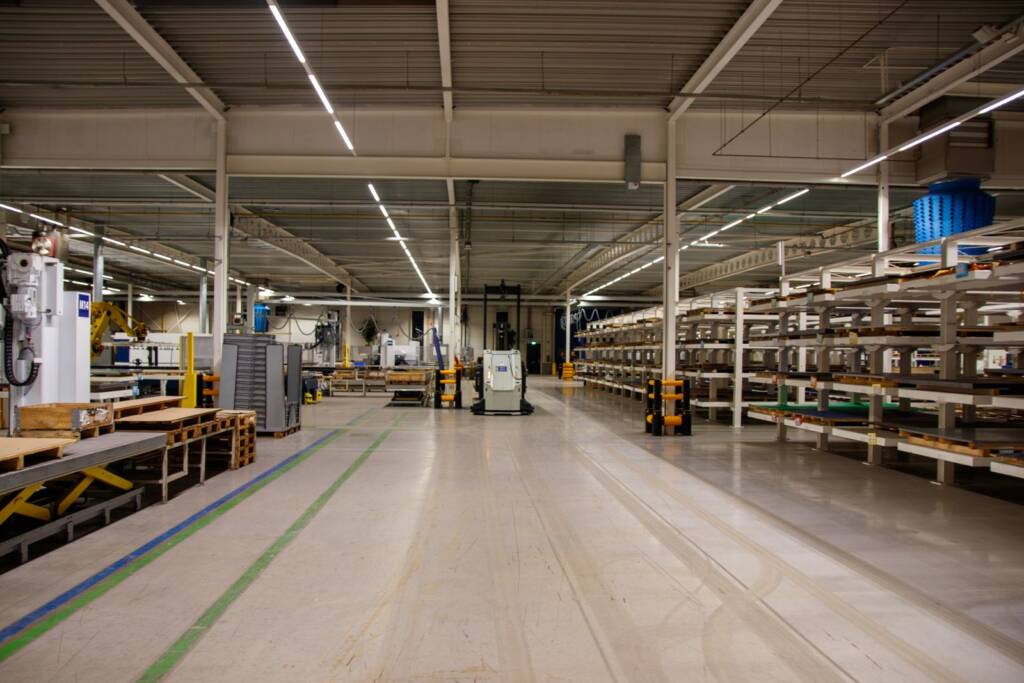
The return on investment (ROI) for warehouse automation in ecommerce fulfillment comes from three sources:
1. Labor cost reduction. Automated pick sequencing and verification increases picker productivity — more picks per hour per worker — which reduces the labor cost per order. Per publicly available logistics industry benchmarks, well-implemented pick optimization can increase picker productivity by 20–40% compared to unoptimized manual picking.
2. Error cost reduction. The true cost of a wrong item includes: return shipping, reshipping the correct item, customer service time, potential refund, and long-term damage from a negative review. Industry data suggests ecommerce picking error rates in manual operations range from 1–3% of orders. Automated barcode verification at pick reduces that error rate substantially.
3. Shipping cost optimization. Automated cartonization reduces wasted dimensional weight. An algorithm that selects the smallest box that safely fits the items can meaningfully reduce shipping costs, particularly for lightweight items where dimensional weight pricing applies.
Dropshipping Automation Platform: When Software Replaces Manual Routing
For dropshippers specifically, the fulfillment routing layer is where automation delivers significant value:
Order routing automation. In a multi-warehouse 3PL network, incoming orders need to be routed to the optimal fulfillment node. A software platform with automated routing makes this calculation in milliseconds per order, selecting the warehouse that minimizes transit time and cost for each specific order.
Inventory synchronization. Your Shopify, WooCommerce, or TikTok Shop store needs to know what’s in stock at each fulfillment node in real time. Automation pushes inventory updates bidirectionally, ensuring you never sell an out-of-stock item without knowing it.
Returns routing automation. Automated systems generate return authorizations, provide return shipping labels, route returned items to the appropriate facility, inspect them, and process the refund or restock based on pre-configured rules — without manual involvement from your store team.
Automated Shipping: How Carriers and Warehouses Work Together Automatically
Modern 3PL shipping automation works through carrier APIs and negotiated accounts:
Dynamic carrier selection. The WMS selects from a panel of carriers (USPS, UPS, FedEx, regional carriers) based on real-time rate comparison for each specific shipment. For a customer paying for standard shipping, it selects the cheapest acceptable option.
Manifest automation. Automated systems generate carrier manifest files that list all packages going to each carrier on each day. This eliminates the manual tallying and documentation that used to accompany carrier drop-offs.
Tracking automation. Once a carrier scans a package, the tracking event flows back through the carrier API to the WMS and then to your ecommerce platform automatically. Your customer sees tracking without any manual work from you.
Exception management. When a carrier reports a delivery exception, automated systems generate alerts and may automatically generate a replacement shipment or initiate a trace with the carrier.
How BLB Implements Automated Picking for Dropshipping Partners
BLB’s approach to automated picking for its dropshipping partners centers on three principles: WMS-layer optimization first, quality verification at every step, and continuous improvement based on operational data.
- WMS-layer automation across all 6 warehouses. BLB’s warehouse management system handles wave optimization, pick path sequencing, barcode verification at pick, automated cartonization, and carrier selection for every order across all six US fulfillment locations.
- AI-based order routing. BLB’s system automatically routes each incoming order to the nearest warehouse with available inventory. An order from Chicago routes to BLB’s Midwest warehouse if inventory is available, rather than shipping cross-country from New Jersey.
- Dual inspection protocol. BLB’s IQC (Incoming Quality Control) verifies stock when it arrives. BLB’s FQC (Final Quality Control) verifies the picked and packed order before dispatch. The documented pass rate across this dual inspection system is 99.8%.
- No configuration required for partners. The integration connects to your WooCommerce, Shopify, or TikTok Shop store; the automation runs on BLB’s side. Partners get the efficiency of automated fulfillment without building it themselves.
Related Resources
- BLB’s Dropshipping Fulfillment hub — the main guide to the 8-part dropshipping fulfillment series
- WooCommerce 3PL guide — how to evaluate and integrate a 3PL with your WooCommerce store
- East Coast fulfillment evaluation guide — step-by-step framework for evaluating East Coast fulfillment providers
Data Sources
- US Census Bureau, E-commerce Retail Sales
- Baymard Institute, Cart Abandonment Rate Statistics
- National Retail Federation (NRF)
- eMarketer, US Ecommerce Trends
 English
 German
 Greek
 Spanish
 French
 Italian
 Dutch
 Polish
 Portuguese
 Swedish